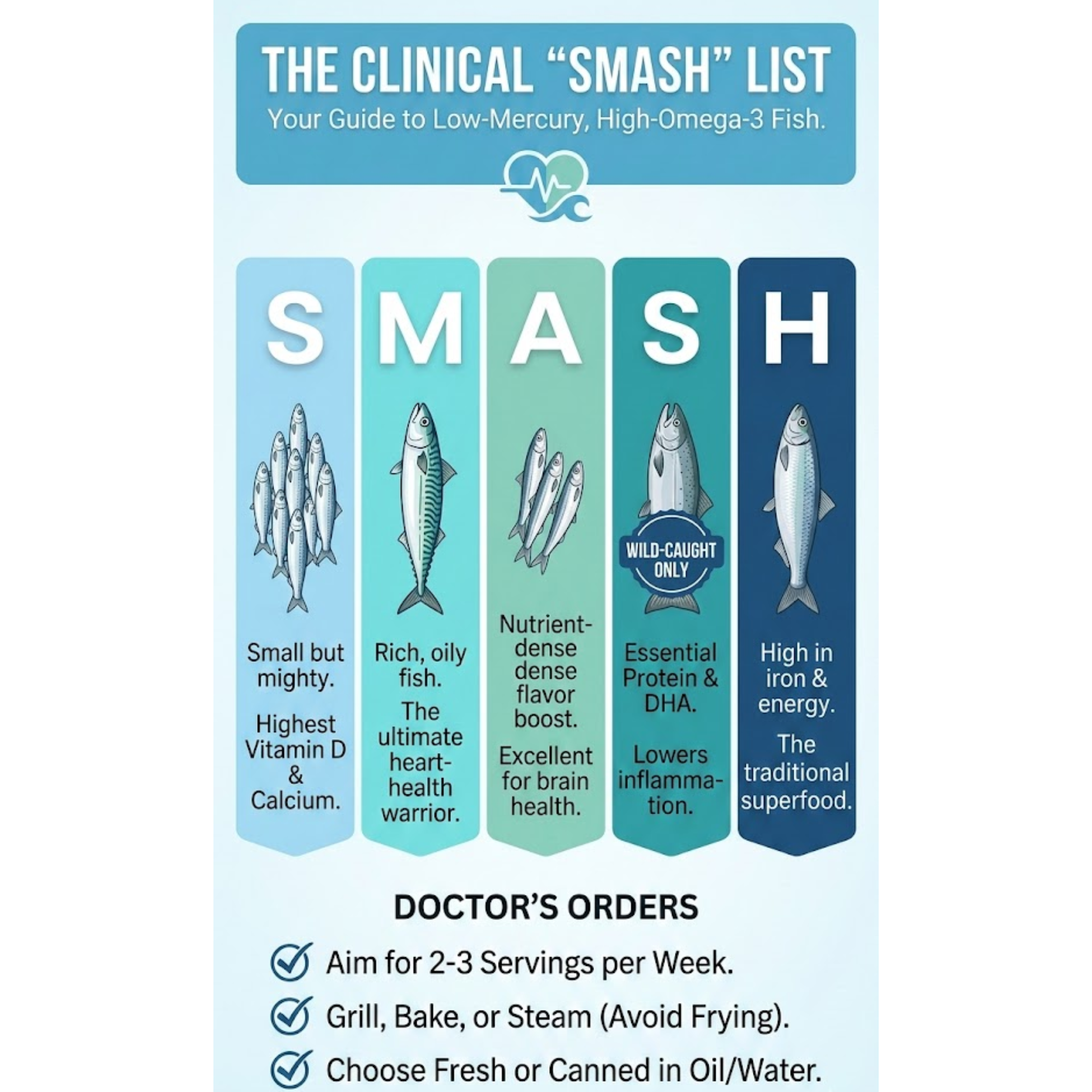
The SMASH List: Your Guide to the Healthiest Fish
When patients ask me for the single most effective dietary change they can make for heart and brain health, my answer is almost always the same: Follow the SMASH list.
In the world of nutrition, not all seafood is created equal. To get the maximum "medicinal" benefit from fish while avoiding modern environmental risks, you need a strategy. Here is the breakdown of why this list is the new standard for healthy eating.
What is the SMASH List?
SMASH is an acronym for five specific types of fish that are high in healthy fats but low in mercury and toxins:
Sardines
Mackerel (Atlantic or Chub)
Anchovies
Salmon (Wild-caught)
Herring
Why These Five?
These fish are smaller and lower on the food chain. Because they have shorter lifespans, they don't have time to accumulate the high levels of mercury or heavy metals found in larger apex predators like Tuna or Swordfish.
The Clinical Benefits:
High DHA & EPA: These specific Omega-3s reduce systemic inflammation and protect arterial health.
Vitamin D Boost: SMASH fish are among the few natural food sources of Vitamin D, which is essential for immune function and bone density.
Metabolic Support: They provide lean, high-quality protein that stabilizes blood sugar and maintains muscle mass without the high saturated fats found in red meat.
How to Use the List
For optimal clinical results, aim for two to three servings from the SMASH list per week (approximately 3.5 to 4 ounces per serving).
Best Way to PrepareWhat to AvoidGrill, Bake, or Steam: Preserves the fragile Omega-3 oils.Deep Fried: High heat and seed oils can negate the heart-health benefits.Canned in Water or Olive Oil: A convenient, high-protein pantry staple.High-Mercury Choices: Limit "trophy fish" like Shark or King Mackerel.Fresh Wild-Caught: The gold standard for a natural mineral profile.Breaded/Processed: Often contains unnecessary sodium and fillers.
Final Thoughts
By sticking to the SMASH List, you are choosing fish that are not only better for your body but are generally more sustainable for the environment. If you find it difficult to hit your weekly goal through whole foods alone, let’s discuss pharmaceutical-grade supplementation at your next visit.